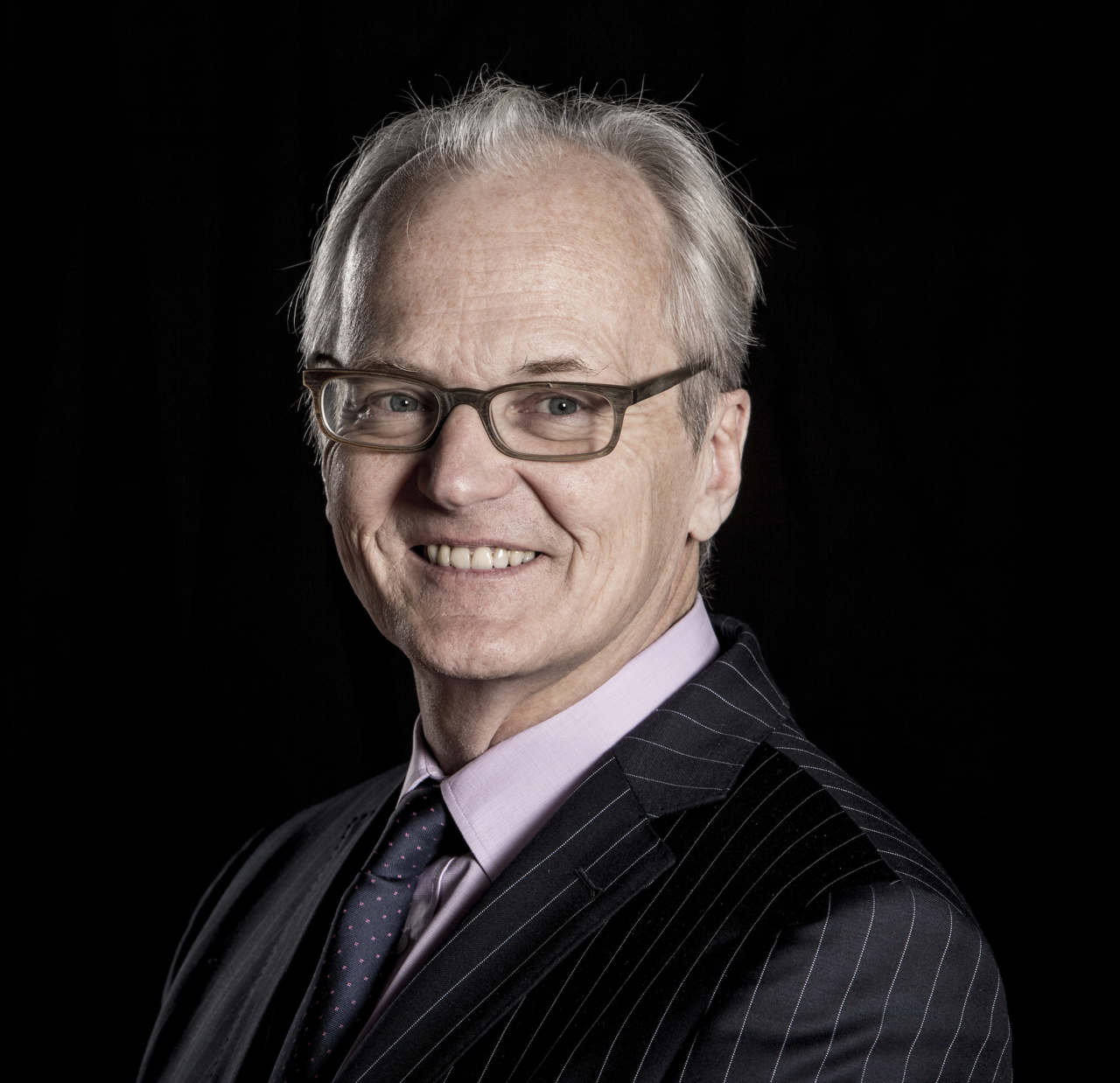
From Cambridge to Billions: Unpacking David Harding's Net Worth & Transformative Career
Sir David Winton Harding stands as a titan in the world of finance, a name synonymous with quantitative investment strategies and groundbreaking philanthropy. Born in Oxford and educated at the prestigious University of Cambridge, Harding didn't just join the financial industry; he redefined it. His journey from a natural sciences graduate to the founder of the multi-billion-dollar Winton Group and a celebrated philanthropist is a testament to intellectual rigor, entrepreneurial spirit, and an unwavering belief in the power of data. Understanding David Harding's net worth is not merely about a figure; it's about tracing the remarkable trajectory of a man who built a financial empire on scientific principles and then generously gave back to society.
Harding's story is a compelling narrative for anyone interested in the intersection of science, finance, and impact. His unique approach to investment has left an indelible mark on the hedge fund landscape, while his significant charitable contributions have fostered advancements in scientific research and education. This article delves into the various facets of his illustrious career, exploring how his academic foundation shaped his professional path, the innovative strategies that led to his immense success, and the philanthropic legacy he continues to build.
The Formative Years: A Foundation of Science and Intellect
Born on August 24, 1961, in Oxford, England, David Harding's early life was rooted in the picturesque Oxfordshire countryside, where he was raised in Goring-on-Thames as the youngest of four children. His father, Winton Harding, played a significant role in his upbringing, though details about his mother remain largely private. From an early age, Harding displayed a keen interest in the natural sciences, a passion that would become the bedrock of his future endeavors.
This scientific inclination led him to Pangbourne College in Berkshire, where he honed his analytical skills. His academic journey culminated at St. Catharine’s College, University of Cambridge, where he earned a first-class honors degree in natural sciences in 1982. This rigorous academic training, focusing on empirical observation, data analysis, and logical deduction, proved to be an unconventional yet ultimately powerful foundation for a career in finance. It instilled in him a mindset that would later challenge traditional investment approaches, favoring data-driven decisions over intuition or market sentiment.
The lessons from Cambridge weren't just about scientific facts; they were about a method of thinking, a systematic way of dissecting complex problems. This analytical framework would become the signature of his professional life, transforming the way he viewed markets and opportunities. For those looking to forge a unique path in any industry, Harding's early life offers a powerful lesson: sometimes, the most indirect educational route can lead to the most innovative solutions.
Pioneering Quantitative Finance: From Trainee to Trailblazer
Harding's foray into the professional world began conventionally enough, as a trainee stockbroker at Wood Mackenzie. However, it wasn't long before his scientific mind sought more challenging and analytical terrain. He moved to Johnson Matthey & Wallace, diving into the fast-paced world of commodity futures trading. It was here that he began to grasp the potential of systematic approaches to market analysis.
A pivotal moment arrived in 1985 when he joined Sabre Fund Management, one of the UK's nascent commodity trading advisors (CTAs). Sabre was an early adopter of quantitative strategies, and Harding quickly found his stride. This experience laid the groundwork for his most significant entrepreneurial venture. In 1987, he co-founded Adam, Harding & Lueck (AHL), a firm that would become a cornerstone of quantitative trading. AHL's success was rooted in its systematic, scientific approach to identifying market patterns and executing trades – a stark contrast to the discretionary, instinct-driven methods prevalent at the time.
AHL's innovative model quickly attracted attention, leading to its acquisition by ED & F Man (later known as the Man Group) in 1989. Harding took on the role of head of Man Quantitative Research in 1994, but the bureaucratic environment of a large corporation proved frustrating for his research-driven ethos. The desire for a firm singularly dedicated to scientific research and data-driven investment ultimately led him to leave in 1996, sowing the seeds for his next, even more ambitious undertaking.
Winton Group: A Paradigm Shift in Investment
The culmination of David Harding's vision and experience came in 1997 with the establishment of Winton Group. Named after his father, Winton was founded on the principle that financial markets, while seemingly chaotic, exhibit discoverable patterns and statistical properties that can be exploited through rigorous scientific research. Harding's approach eschewed traditional marketing hype and gut feelings, instead championing an empirical, evidence-based methodology.
Under Harding's leadership, Winton Group rapidly grew into a global leader in quantitative investment strategies, managing billions in assets for institutional clients worldwide. The firm’s success was built on:
- Data-Driven Decisions: Utilizing vast datasets and sophisticated algorithms to identify correlations and predictive signals across various markets.
- Scientific Rigor: Employing a large team of scientists, mathematicians, and programmers to conduct ongoing research, develop new models, and continuously refine existing strategies.
- Risk Management: A systematic approach to understanding and managing risk, often diversifying across numerous markets and strategies to reduce overall volatility.
- Innovation: Constantly adapting and evolving its strategies in response to changing market dynamics and technological advancements.
Winton Group didn't just participate in the hedge fund industry; it helped redefine it, demonstrating that a scientific, dispassionate approach could yield consistent returns and scalable growth. Harding’s philosophy highlighted that successful investing wasn't just an art form but a science, requiring continuous experimentation and validation. For deeper insights into this pioneering journey, you might want to read Sir David Harding's Net Worth: The Winton Group Billionaire Story.
Philanthropy and Enduring Legacy
Beyond his profound impact on the financial sector, David Harding is equally renowned for his extensive philanthropic endeavors. His giving is not random but deeply aligned with his scientific background and passion for education, focusing on areas that foster critical thinking and advance human understanding.
One of his most significant contributions came in 2019 when he donated a staggering £100 million to the University of Cambridge. This monumental gift stands as the largest single donation by a British citizen to any university, underscoring his commitment to his alma mater and to the advancement of knowledge. The donation was earmarked to support PhD scholarships, particularly for students from underrepresented backgrounds, and to attract leading academics, further solidifying Cambridge's position as a world-class research institution.
Harding's philanthropy extends further, including the endowment of the Winton Professorship of the Public Understanding of Risk at Cambridge, and the establishment of the Harding Center for Risk Literacy at the Max Planck Institute for Human Development. These initiatives reflect his belief in the importance of helping society better understand and navigate risk, a core principle he applied to financial markets. In recognition of his immense contributions to philanthropy, Sir David Harding was deservedly knighted in the Queen’s New Year Honours in 2022.
His charitable work is a powerful demonstration of how wealth, accumulated through innovative enterprise, can be channeled back into society to foster progress and enlightenment. It reflects a commitment not just to personal success but to collective advancement.
David Harding's Net Worth: The Billion-Dollar Figure
When discussing David Harding's net worth, it's important to look at credible, authoritative sources. While some early or less reliable estimates online might present vastly different figures, established financial publications and reputable biographical sources consistently place his wealth in the billionaire category.
As of 2021, David Harding's net worth was widely estimated to be around $1.3 billion. This impressive figure is primarily derived from his ownership stake and the immense success of Winton Group, which under his stewardship, has managed billions of dollars in assets. His wealth is a direct reflection of Winton's profitability and the long-term capital appreciation of his investment in the firm he built from the ground up. This accumulation of wealth through sophisticated quantitative strategies highlights the lucrative potential of a scientific approach to finance, when executed with precision and foresight.
It's worth noting that net worth figures for billionaires are often estimates, as their wealth is typically tied up in private company stakes, investments, and other assets that fluctuate in value. However, the consistent reporting of his net worth in the billions by sources like Forbes and GuruFocus underscores the scale of his financial achievements. His journey from a natural sciences graduate to a self-made billionaire provides a compelling blueprint for how a unique vision, coupled with relentless execution, can yield extraordinary financial success. For more insights into the strategies behind his wealth, consider reading David Harding: Quant Investing Pioneer & Philanthropic Billionaire.
Conclusion
Sir David Winton Harding's life story is a powerful narrative of innovation, intellectual curiosity, and profound impact. From his academic grounding in natural sciences at Cambridge to his pioneering role in quantitative finance with AHL and Winton Group, he consistently challenged conventional wisdom and forged new paths. His commitment to systematic, data-driven investment strategies not only created a multi-billion-dollar enterprise but also set new standards for the hedge fund industry. Beyond the impressive figures of David Harding's net worth, his legacy is further cemented by his extraordinary philanthropy, which has channeled significant resources into scientific research and education, ensuring that his influence extends far beyond the financial markets. Harding stands as a true polymath of the modern era, demonstrating how a scientific mind, coupled with entrepreneurial courage and a generous spirit, can leave an indelible mark on the world.
